
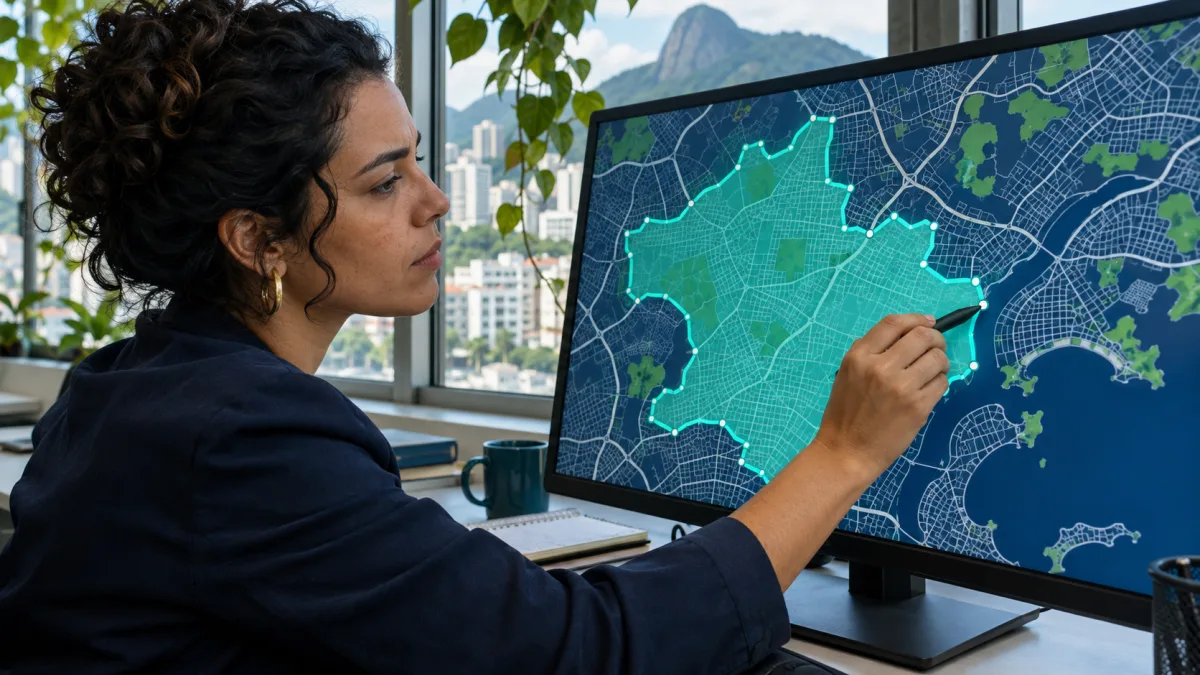
Geofencing for ride-hailing apps works best when service boundaries reflect actual pickup routes. A service boundary can look precise on a map and still fail at an airport entrance or a street that crosses two districts. A useful geofence reflects how riders and drivers actually reach each other.
Geofencing for ride-hailing apps
A map polygon does not tell the whole story. A rider may stand on one side of a road while the only safe entrance is on the other. Airports, terminals and gated communities create similar edge cases. Start by separating three questions: where can someone request a ride, where can a driver pick them up, and where may a trip end? Those areas do not always have the same boundary.
Give people a useful answer
When a request falls outside coverage, explain why and suggest a nearby pickup point if one exists. Show drivers the destination rules before they accept an assignment. Meanwhile, let operations staff configure exceptions by service type and time of day. A change history matters because a boundary that worked last month may no longer reflect the available fleet.
A boundary that needs an exception
Consider a transport operator that serves the city center but also receives requests from a hospital just beyond its boundary. A rigid circle would reject those riders even when a driver can reach the entrance safely. A better pilot marks the hospital access road as an explicit exception and checks whether drivers accept the resulting trips. The operator can then compare rejected requests with completed rides and support complaints. That evidence shows whether the geofence reflects real capacity. It also gives customer service a rule it can explain in one sentence.
Run a small border test
Choose one area and replay rejected requests, cancellations and support conversations. Test addresses at the edges, including places where the GPS pin differs from the actual entrance. Then compare completed rides, empty driving and waiting time before expanding the zone. If the same exception appears repeatedly, turn it into a documented rule instead of relying on a support agent to rescue each booking.
Discuss your geofencing for ride-hailing apps project
Share your current workflow and the outcome you need. We can help scope a pilot, build the software and measure its value for your business.